Finger on the trigger
Climate-exposed Australia is primed for parametric solutions, says leading provider Descartes
By John Deex
Parametric insurance is a rapidly expanding market. Estimates vary, but some reports suggest it’s on track to be valued at more than $US50 billion in less than a decade.
Paris-headquartered Descartes recognised this potential when it launched about six years ago, and it is now reaping rewards across the world.
Descartes says it is the largest parametric underwriter, with a team of 220 across offices in the US, Mexico, Europe, Asia and Sydney. It is writing more than $US200 million a year in premium, with 10% of that from Australia, and aims to grow by 40%-50% this year and next.
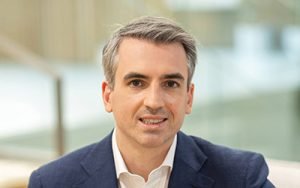
“We really wanted to innovate in the face of climate change,” co-founder and CEO Tanguy Touffut told Insurance News during a visit to Melbourne in March.
“Unfortunately, Australia is at the forefront of what’s happening, with a higher frequency in terms of the bushfire, flood, cyclone, drought and frost events you may face.”
Parametric insurance uses defined weather triggers to initiate pre-agreed payments.
“Everything is clear up front in the contract,” Mr Touffut says. “That’s the beauty of parametric.”
He says claims disputes do not really exist in the parametric world, which enables better understanding of coverage and faster payouts.
“Wordings [in traditional insurance] tend to be very complex. There may be, in some cases, questions about what it really means. With parametric insurance, usually one page should be sufficient to understand the policy.
“And we want to be able to pay claims very quickly. In the US, traditional insurers take an average of 550 days between the declaration of loss and the claim payment. So we want to avoid that.
“In terms of the economics, it’s more appealing too. If there is no litigation, no loss adjusters involved, it’s much more efficient.”
Descartes’ head of business development for Australia and New Zealand Lynn Roehrig says recent claims handling issues under traditional policies may have pushed some clients towards parametric options.
“With restrictions and exclusions and so on, some clients may not have had the best experience, with some claims going on for years and years,” he says.
“They see the benefit of the quick liquidity payouts as being a big driver for their business.”

“Australia is at the forefront of climate change, but I think it is also at the forefront of innovations in insurance.”
Descartes CEO Tanguy Touffut
Mr Touffut says increasing deductibles may also have had an impact – and sometimes clients look to combine parametric and traditional solutions.
“Retentions may increase, and clients are left in a very risky situation. So they’re looking to cover the frequent events with parametric for better liquidity, so a fast claim payment. For more remote events, they will still have the traditional insurance coverage.”
Mr Roehrig says brokers in Australia have different levels of understanding around parametric offerings – but there is increasing interest.
“It’s our job as a team to really educate clients and brokers. And I think robust discussions really help the product accelerate.
“We have some clients that will understand and take it on in the first year of talking about it, and then there are some clients that take two, three years.
There’s definitely a lot of heavy lifting at the beginning, and then once they get their head around how the product works, it tends to be sticky business. So it’s really about the long-term relationship.”
Mr Touffut says Australia brings geographical diversity for the company, and a range of opportunities.
Descartes is “sector agnostic” but the big three risks of flood, bushfire and cyclone stand out as the perils shaping demand.
“What matters is weather sensitivity. We can insure resorts against cyclones on both coasts. We can insure large plantations against bushfire. We can insure crops against frost or hail. Flood of course, is a big topic.
“And we can also cover renewable energy companies. It could be lack of wind energy content, because if the wind doesn’t blow enough on a yearly basis, it has some huge financial consequences, and wind is quite volatile. Climate change is having an impact on wind speed across the world. For solar farms it’s more about hailstorms.”
Mr Touffut says Descartes is a tech company too, with software engineers, data scientists and catastrophe modellers on the books.
“It helps us feel more confident about extreme events and able to deploy large capacities.”
Access to information makes the company less prone to sudden appetite changes after events, he says.
“After the LA fires, many insurers are just walking away from the California market. In our case, this is something that was anticipated and modelled, so we are deploying more capital, actually.
“Some insurers may overreact because they don’t know how to model the underlying risk. In our case, we will be steady and we won’t overreact, because we do analytics upfront.”
Descartes is also exploring whether parametric-style coverage can work in other areas of insurance, such as trade credit or cyber. It is already offering a “hybrid” cyber product in Europe.
“For cyber, the way it is triggered, it’s not fully parametric. The attack, the encryption is the trigger, and we agree up front with the clients how much is to be paid every day to keep the company alive.
“Because, in the end, for cyber, our goal is really to make sure that the company won’t go bust.”
For now, in Australia, Descartes sees plenty of growth in its weather peril products. But Mr Touffut does not rule anything out for the future – especially with the support of innovative brokers.
“We have been very successful at expanding many different natural catastrophe products in Australia, but we hope we’ll gain a larger product range soon.
“I mentioned that Australia is at the forefront of climate change, but I think it is also at the forefront of innovations in insurance, because of very dynamic networks of brokers looking for new ways to cover their clients. So I really see good traction in Australia compared with other markets.
“In our case, parametric is not an end. It’s a means to improve the customer experience.”